Fat Cryolipolysis
Cryolipolysis, commonly known as fat freezing, is a non-invasive body-contouring treatment that uses controlled cooling to destroy fat cells.
It is designed to reduce localized pockets of fat, not to treat obesity or produce significant weight loss.
How it works
Fat cells are more sensitive to cold than skin, muscles, nerves, and other surrounding tissues.
During treatment:
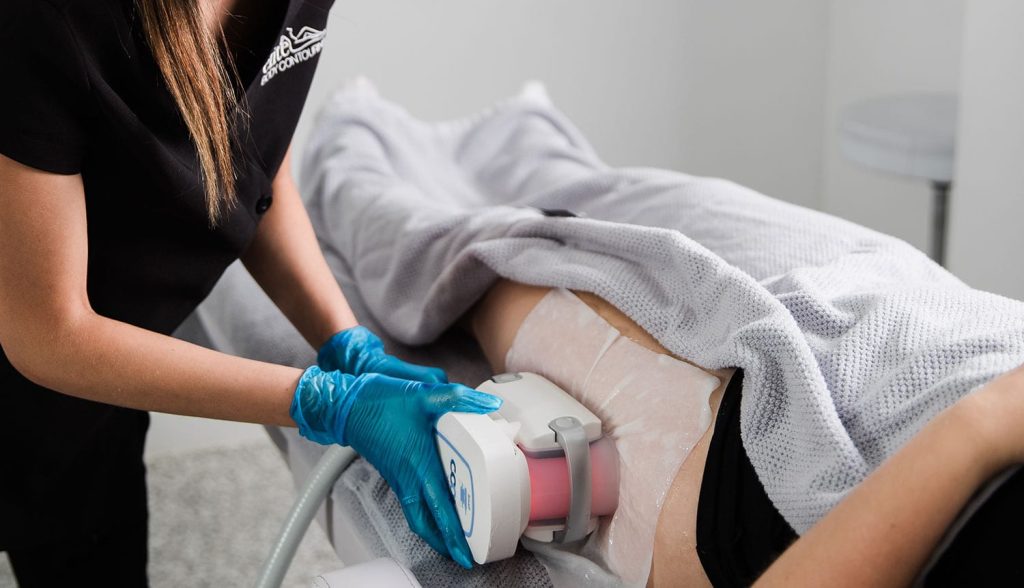
- An applicator is placed over the target area.
- The device gently suctions the tissue into the applicator.
- The fat is cooled to a carefully controlled temperature for about 35–60 minutes, depending on the device and treatment area.
- The cold damages fat cells (a process called cryolipolysis) without freezing the skin.
Over the following weeks, the damaged fat cells undergo apoptosis (programmed cell death).
The body’s immune system then:
- Breaks down the damaged fat cells.
- Gradually removes them through the lymphatic system.
- Leaves the surrounding tissues largely unaffected.
What areas can be treated?
Cryolipolysis is commonly used on:
- Abdomen
- Flanks (“love handles”)
- Thighs
- Upper arms
- Back
- Under the chin (double chin)
- Bra fat
- Areas beneath the buttocks (“banana roll”)
What results can you expect?
Clinical studies have found that a single treatment can reduce the thickness of the treated fat layer by approximately 15–25% on average, although results vary between individuals.
Most people notice:
- A slimmer contour.
- Better definition.
- Reduction in stubborn fat deposits.
Results usually begin to appear after 3–4 weeks, with the most noticeable changes occurring after 2–3 months.
Some people choose additional treatments to enhance the result.
Is the fat gone permanently?
Yes, the fat cells destroyed by cryolipolysis are permanently removed by the body.
However:
- Remaining fat cells can still enlarge if you gain weight.
- Maintaining a stable weight helps preserve the results.
Does it tighten skin?
Cryolipolysis is not primarily a skin-tightening treatment.
Some people notice mild skin tightening after fat reduction, but if loose skin is the main concern, treatments such as radiofrequency (RF) or surgery are generally more effective.
Is it safe?
Cryolipolysis is generally considered safe when performed by trained providers.
Common temporary side effects include:
- Redness
- Swelling
- Bruising
- Numbness
- Tingling
- Tenderness
- Firmness in the treated area
These usually resolve over days to weeks.
Rare complication: Paradoxical Adipose Hyperplasia (PAH)
A rare but important complication is paradoxical adipose hyperplasia (PAH).
Instead of shrinking, the treated fat becomes:
- Larger
- Firmer
- More noticeable
PAH is uncommon but typically requires liposuction or surgery if treatment is desired.